
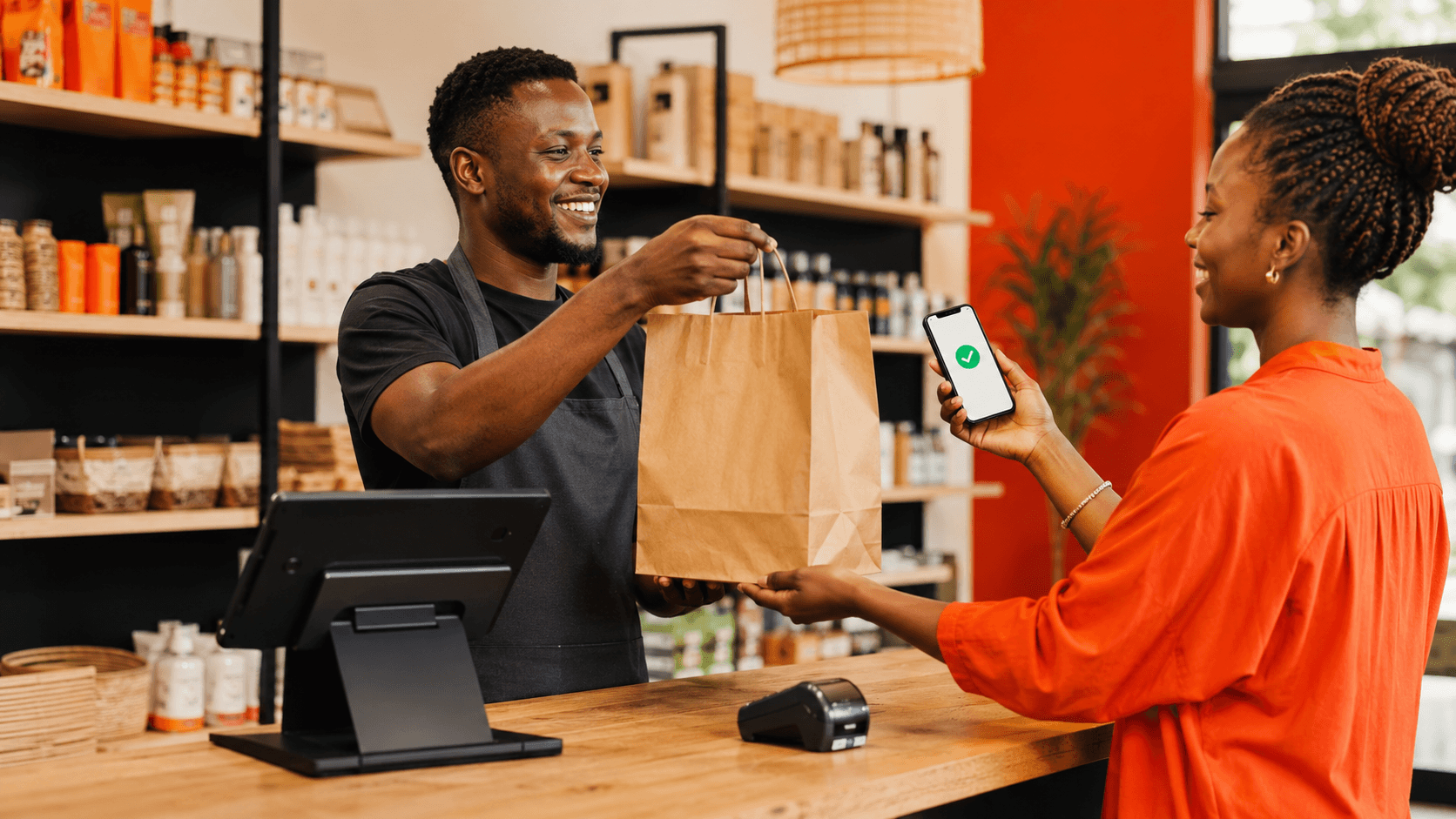
Customer pays with a mobile device while the cashier hands over a brown paper bag at a shop counter.

Should Your Shop Offer Buy Now, Pay Later in Kenya?

Buy Now, Pay Later is no longer a big-supermarket gimmick — it is quietly becoming the way many Kenyans shop. If you run a retail shop, a wines and spirits outlet, or a bar, the question isn’t whether your customers want to pay later. They already do.

Picture a customer in your wines and spirits shop on Thika Road, eyeing a KES 4,500 bottle three days before payday. Today they walk away empty-handed. With the right pay-later option, they walk away with the bottle — and you make the sale. Multiply that by the dozens of “I’ll come back end-month” moments you see every week, and you start to see why this matters.

Buy Now, Pay Later Is Booming in Kenya

BNPL has gone from niche to mainstream in just a few years. Kenya’s Buy Now, Pay Later market is on track to reach roughly USD 1.39 billion in 2026, growing close to 25% in a single year. That is not a fad — it is a shift in how people budget.

Your customers already know the names. Safaricom’s Faraja lets Lipa Na M-Pesa shoppers buy from as little as KES 20 up to KES 100,000 and settle within 30 days at zero interest to the customer. Lipa Later, Aspira, and M-KOPA have built whole businesses on letting people spread payments. The behaviour is everywhere — your shop is simply deciding whether to meet it.

  • It smooths the gap between paydays — a real pressure in an end-month, cash-tight economy.
  • It makes bigger purchases feel affordable, so basket sizes go up.
  • It rewards shops that say “yes” with loyalty and repeat visits.

Two Very Different Ways to “Pay Later”

Here is where most shop owners get confused. “Pay later” actually means two completely different things, and they carry completely different risks.

  • Third-party BNPL (Faraja, Lipa Later, Aspira): A licensed provider pays you in full — often immediately — then collects from the customer. The credit risk sits with them, not you. In return, you usually pay a facility or merchant fee on each sale.
  • Your own in-house credit — the famous “kuandika kwa kitabu”: You let a trusted customer take goods now and settle later, scribbled in an exercise book or a phone note. There is no fee, but every shilling of risk is yours. If they don’t pay, you lose both the stock and the cash.

Both are “Buy Now, Pay Later.” Only one of them protects your cash flow.

The Case For Saying “Yes” to Pay Later

Offered well, pay-later options can be one of the cheapest ways to grow sales. The upside is real:

  • Bigger baskets: Customers buy the crate instead of the six-pack when they can spread the cost.
  • More completed sales: You rescue the purchases that would otherwise walk out the door.
  • A reason to come back: A customer with an open, well-managed account has a real relationship with your shop.
  • Competing with the big guys: If the supermarket down the road offers it, matching that convenience keeps you in the race.

See How PawaPOS Tracks Every Customer Account

Whether it’s Faraja or your own book, the difference between a smart credit policy and a slow leak is record-keeping. PawaPOS gives you a live view of who owes what — so “pay later” never becomes “never paid.”

The Risks Most Shop Owners Don’t See Coming

Pay later is not free money. Before you say yes, look honestly at the costs.

  • The fee eats your margin. Third-party providers charge a facility or merchant fee on each sale. On thin-margin products, that fee can quietly turn a small profit into a loss if you haven’t priced for it.
  • Book credit becomes bad debt. That exercise book is where profits go to die. Forgotten balances, “but I already paid you” disputes, and customers who simply vanish are a daily reality for shops running informal credit.
  • You lose track of who owes what. When credit lives in someone’s head or a torn notebook, you cannot tell at a glance whether you are owed KES 5,000 or KES 50,000.
  • It hides your true stock position. Goods that left on credit but were never recorded look exactly like shrinkage at stocktake — so you end up chasing a “loss” that is actually money out on the street.

So, Should Your Shop Offer Buy Now, Pay Later?

There is no single answer — it depends on what you sell and how disciplined your records are. Use this as a quick guide:

  • High-value, low-frequency items (electronics, furniture, large liquor orders): Third-party BNPL is often worth it. Let the provider carry the credit risk and price the fee into your margin.
  • Fast-moving, low-margin goods (a duka, a bar selling single drinks): Be very cautious with informal credit. Fees and bad-debt risk rarely justify themselves on small tickets — keep your sales quick, clean, and cash or M-Pesa.
  • Trusted regulars and bulk buyers (a restaurant supplier, a corporate client): A formal, recorded credit account can deepen the relationship — but only with clear limits and a system that tracks every shilling.

The deciding factor isn’t whether pay-later is “good” or “bad.” It’s whether you can see, at any moment, exactly who owes you and how much.

Whichever Way You Go, Your Records Decide

Every successful pay-later strategy rests on one thing: clean, current records. This is exactly where most Kenyan shops lose money — not on the decision to offer credit, but on failing to track it. A cloud POS like PawaPOS turns “pay later” from a gamble into a managed part of your business.

You can set up customer accounts with credit limits, record every sale against the right customer, and watch outstanding balances in real time. Because the same system tracks your stock, goods that leave on credit are properly accounted for — so your stocktake finally matches reality.

  • Set credit limits per customer, so no one runs up a balance you can’t absorb.
  • See who owes what across all your branches — from your phone.
  • Reconcile credit sales against stock automatically, ending “phantom shrinkage.”
  • Pull a debtors report in seconds instead of squinting at a notebook.

Final Thoughts

Buy Now, Pay Later is here to stay, and for many Kenyan shops it is a genuine growth lever. But it only works when you can answer one question instantly: who owes me, and how much? Offered blindly, pay-later is just a polite way to give your stock away. Tracked properly, it grows your basket sizes and builds real loyalty.

Talk to us about setting up customer accounts and credit tracking in PawaPOS — before the next “I’ll pay you end-month” walks out your door.

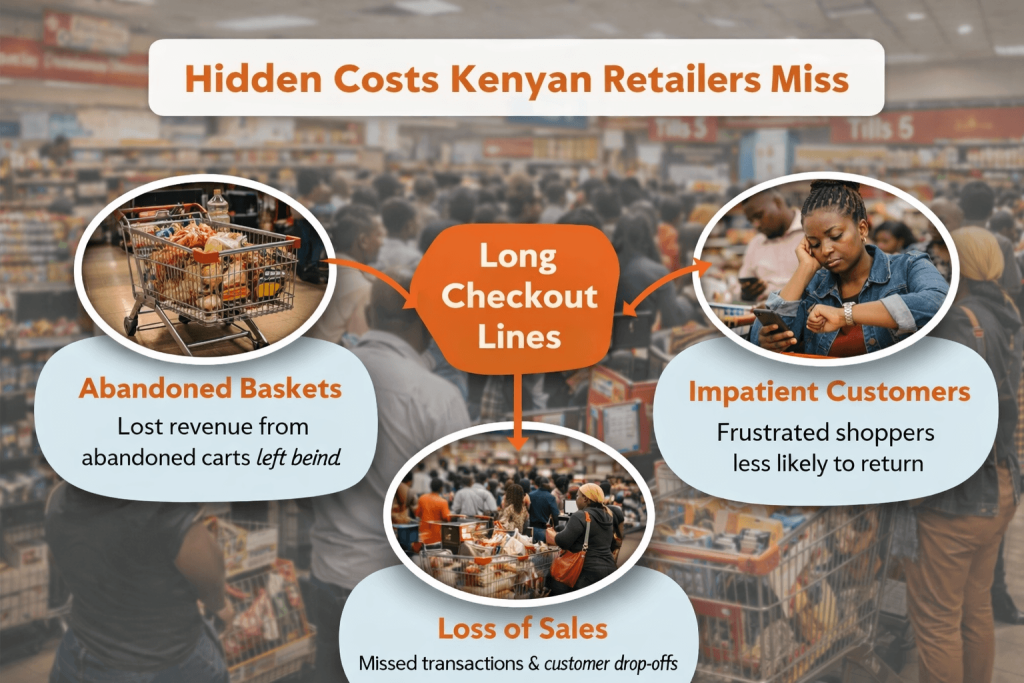
How to Stop Losing Money at Checkout: The Hidden Costs Kenyan Retailers Miss

Every retailer knows the frustration: customers walk in, fill their baskets, then abandon their purchases at the checkout line. It’s a silent profit killer happening in retail stores across Kenya, costing businesses thousands of shillings daily, and most don’t even realize it’s happening.

Martha Mbugua, a retail operations leader, put it perfectly: “A customer can forgive an out-of-stock item. They rarely forgive a long checkout queue.” Yet many retailers still treat their checkout as an afterthought, focusing on merchandising while losing customers at the final, most crucial step.

The checkout isn’t just where transactions happen, it’s where customers decide if they’ll return. And right now, outdated systems are bleeding your profits in ways you might not see on your daily reports.

The Real Cost of Slow Checkouts

Picture this: It’s Saturday afternoon at your store. Five customers are waiting in line, each holding items worth KES 2,500. Your cashier is manually entering prices, the customer disputes an amount, the till drawer jams, and an M-Pesa payment needs manual confirmation.

By the time you look up, two customers have left, taking KES 5,000 in lost sales with them. And they probably won’t be back.

Fast checkout isn’t a luxury, it’s a competitive advantage. When your competitors can process a transaction in 30 seconds while yours takes 3 minutes, you’re not just losing sales. You’re losing customers to businesses that respect their time.

Modern POS systems like PawaPos eliminate these bottlenecks through:

  • Lightning-fast barcode scanning – No more manual price entry
  • Instant M-Pesa verification – Payments confirmed in seconds, not minutes
  • Multi-payment options – Cash, card, M-Pesa, all in one smooth flow
  • Automatic calculations – Zero pricing disputes or manual errors

The math is simple: If you process just 10 extra transactions per day because checkout is faster, at an average basket of KES 1,500, that’s KES 15,000 daily, KES 450,000 per month in recovered sales.

The Silent Thief: Retail Shrinkage

Here’s what keeps retail owners up at night: You’re making sales, inventory is moving, but your profits don’t match the math. The culprit? Retail shrinkage—and manual systems make it almost impossible to detect.

Shrinkage comes in three forms:

1. Customer Theft

Without proper tracking, shoplifters walk out with merchandise that never appears on your loss reports. You only notice when stock counts don’t match sales—often weeks or months later.

2. Employee Fraud

Manual tills create opportunity. A cashier undercharges a friend, pockets the difference, or voids legitimate transactions. With no digital trail, these losses are nearly invisible until they’ve cost you thousands.

3. Administrative Errors

Wrong prices entered, incorrect quantities recorded, missing receipts—small mistakes that add up to significant losses over time.

The Kenya reality: Studies show retail shrinkage typically costs businesses 1-3% of total sales. For a store doing KES 2 million monthly, that’s up to KES 60,000 disappearing every month.

Modern POS systems stop shrinkage by creating complete accountability:

  • Every item scanned – No manual price entry means no “friendly discounts”
  • Digital transaction trail – Every sale, void, and refund is timestamped and tracked
  • Real-time inventory sync – Stock levels update instantly, making discrepancies obvious
  • User-level permissions – Track exactly who processed which transactions
  • Automatic reconciliation – Cash drawer amounts match sales reports to the shilling

The impact? Retailers using modern POS systems typically reduce shrinkage by 40-60%, recovering tens of thousands in monthly losses.

The M-Pesa Verification Gap

If you’re still relying on customer SMS screenshots for M-Pesa payments, you’re leaving money on the table, and exposing yourself to fraud.

Here’s what’s happening in Kenyan retail right now:

The Old Way (Still Used by Many):

  1. Customer claims they’ve sent M-Pesa
  2. They show you an SMS screenshot
  3. You trust it and release the goods
  4. Later, you realize the payment never arrived

The Modern Way with PawaPos:

  1. Customer selects M-Pesa payment
  2. System sends STK push to customer’s phone
  3. Payment is verified in real-time through API
  4. Transaction only completes when payment is confirmed
  5. Instant receipt generated

No screenshots. No trust issues. No fraud. Just verified, instant payments.

What Checkout Excellence Actually Looks Like

“Efficient checkouts come from discipline, not urgency:
• Planning staffing around traffic patterns, not schedules
• Opening tills before queues form
• Clear front-end ownership during peak hours
• Leaders actively managing flow in real time”

— Martha Mbugua, Retail Operations Leader

She’s absolutely right—but here’s what she didn’t mention: Great operations need great technology.

This is where PawaPos gives Kenyan retailers the edge:

Sub-3-Second Transactions

From scan to receipt, the entire process is lightning-fast. No lag, no waiting, no frustrated customers.

📊

Real-Time Peak Hour Detection

The system shows you live traffic patterns, helping you decide when to open additional tills—before the queue forms.

💪

Offline-First Architecture

Kenya’s internet isn’t always reliable. PawaPos keeps working even when connectivity drops, syncing automatically when it’s restored.

📱

Mobile POS Option

During peak times, turn any Android device into an additional checkout point. Process sales from anywhere in your store.

The Real-World Impact: A Nairobi Case Study

Before PawaPos:

  • Average checkout time: 4.5 minutes
  • Shrinkage: KES 40,000/month
  • M-Pesa fraud: 2-3 incidents/month
  • Abandoned baskets: 15-20%
  • Monthly revenue: KES 2.2 million

After PawaPos:

  • Average checkout time: 45 seconds ✅
  • Shrinkage: KES 14,000/month ✅
  • M-Pesa fraud: Zero ✅
  • Abandoned baskets: Less than 5% ✅
  • Monthly revenue: KES 2.8 million ✅

27% revenue increase!

Stop the Bleeding: Take Action Today

The question isn’t whether you can afford a modern POS system—it’s whether you can afford to keep losing money without one.

Ready to stop losing money at checkout?


📧 Email: info@cosmopawa.com

🏢 Visit Us:
Cosmo House, Mawe Mbili Road
(off Kangundo Road), Nairobi

Business Hours:
Monday – Friday: 8:00 AM – 6:00 PM
Saturday: 9:00 AM – 2:00 PM EAT


PawaPos is proudly Kenyan, built specifically for East African retailers. We understand your challenges because we work with businesses just like yours every day, from small shops to supermarket chains across Nairobi, Mombasa, Kisumu, and beyond.

Proudly Local. Powerfully Retail.

How Cash Quietly Drains Profit from Kenyan Businesses

2%+

A small daily loss feels harmless until it compounds into hundreds of thousands over a year.

KSh 66K+

That is the kind of monthly cash drag many businesses absorb without ever tracking it properly.

More Control

Digital payments give you records, visibility, and a clearer view of what is really happening in the business.

Also available as a podcast
How Cash Quietly Drains Profit from Kenyan Businesses
Cosmo Pawa · Spotify
▶ Listen on Spotify

The “free” option that is not free

A business handling KSh 100,000 a day and losing just 2% is losing KSh 2,000 every day. That is more than KSh 700,000 a year.

The real monthly cost of cash

Hidden CostMonthly Estimate
Staff shrinkage and theftKSh 24,000 to 60,000
Counting and reconciliation errorsKSh 10,000 to 20,000
Banking time and transportKSh 9,000 to 15,000
Lost sales from no-change momentsKSh 15,000 to 40,000
Security risk exposureKSh 5,000 to 20,000

Estimated total: KSh 66,000 to 163,000 per month.

That money usually does not appear as a clear “cash expense” in your books. It simply shows up as lower margins, slower growth, and profits that never feel as strong as they should.

Why most business owners miss it

Cash losses are quiet

They rarely arrive as one dramatic event. They come through under-counting, small mistakes, missing change, under-reporting, and moments no one tracks properly.

Digital fees are visible

Because the charge is easy to see, it feels more painful. But visible cost is not always the bigger cost. In many cases, cash is far more expensive.

Reality check: A 0.5% fee on KSh 3 million in turnover is about KSh 15,000. Cash losses on the same turnover can be several times higher.

The bigger problem: no data

Cash businesses often operate blind. You may know the total at the end of the day, but you do not have the detail needed to make sharper decisions.

  • No visibility into sales patterns
  • No clear staff performance data
  • No reliable history for planning
  • No strong records for lenders or compliance

With digital payments such as Lipa Na M-Pesa and a modern POS setup, every sale is logged automatically. That means better reconciliation, cleaner records, easier reporting, and fewer surprises at day-end.

Cash vs digital

Cash

Familiar, but costly

  • Hidden losses build up quietly
  • Manual counting takes time
  • Staff theft is hard to detect
  • Lost sales when change is unavailable
  • More physical security risk

Digital

Small fees, stronger control

  • Every transaction is recorded
  • Reconciliation becomes faster
  • Less cash on site means less risk
  • Better reporting and visibility
  • Stronger data for growth and compliance

Start simple

You do not need to change everything overnight. Start by adding digital payment options alongside cash, then move into a full system as the business gets more comfortable.

  • Add an M-Pesa till number
  • Accept QR payments
  • Track sales digitally
  • Upgrade to a modern POS when ready

Cash is not free. It is quietly expensive.

The sooner you reduce cash risk and improve visibility, the sooner you take back control of your margins.