
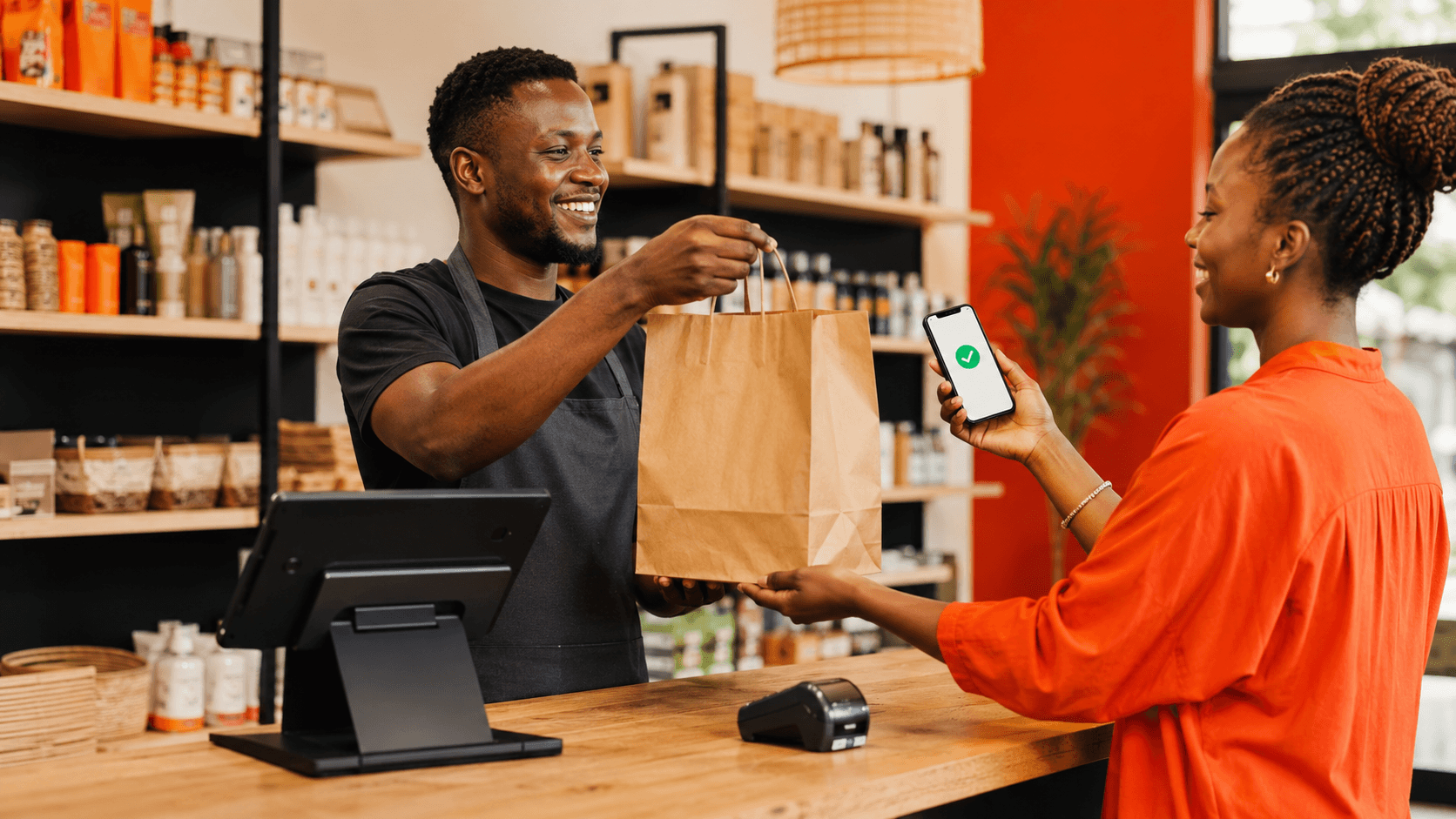
Buy Now, Pay Later is no longer a big-supermarket gimmick — it is quietly becoming the way many Kenyans shop. If you run a retail shop, a wines and spirits outlet, or a bar, the question isn’t whether your customers want to pay later. They already do.
Picture a customer in your wines and spirits shop on Thika Road, eyeing a KES 4,500 bottle three days before payday. Today they walk away empty-handed. With the right pay-later option, they walk away with the bottle — and you make the sale. Multiply that by the dozens of “I’ll come back end-month” moments you see every week, and you start to see why this matters.
Buy Now, Pay Later Is Booming in Kenya
BNPL has gone from niche to mainstream in just a few years. Kenya’s Buy Now, Pay Later market is on track to reach roughly USD 1.39 billion in 2026, growing close to 25% in a single year. That is not a fad — it is a shift in how people budget.
Your customers already know the names. Safaricom’s Faraja lets Lipa Na M-Pesa shoppers buy from as little as KES 20 up to KES 100,000 and settle within 30 days at zero interest to the customer. Lipa Later, Aspira, and M-KOPA have built whole businesses on letting people spread payments. The behaviour is everywhere — your shop is simply deciding whether to meet it.
- It smooths the gap between paydays — a real pressure in an end-month, cash-tight economy.
- It makes bigger purchases feel affordable, so basket sizes go up.
- It rewards shops that say “yes” with loyalty and repeat visits.
Two Very Different Ways to “Pay Later”
Here is where most shop owners get confused. “Pay later” actually means two completely different things, and they carry completely different risks.
- Third-party BNPL (Faraja, Lipa Later, Aspira): A licensed provider pays you in full — often immediately — then collects from the customer. The credit risk sits with them, not you. In return, you usually pay a facility or merchant fee on each sale.
- Your own in-house credit — the famous “kuandika kwa kitabu”: You let a trusted customer take goods now and settle later, scribbled in an exercise book or a phone note. There is no fee, but every shilling of risk is yours. If they don’t pay, you lose both the stock and the cash.
Both are “Buy Now, Pay Later.” Only one of them protects your cash flow.
The Case For Saying “Yes” to Pay Later
Offered well, pay-later options can be one of the cheapest ways to grow sales. The upside is real:
- Bigger baskets: Customers buy the crate instead of the six-pack when they can spread the cost.
- More completed sales: You rescue the purchases that would otherwise walk out the door.
- A reason to come back: A customer with an open, well-managed account has a real relationship with your shop.
- Competing with the big guys: If the supermarket down the road offers it, matching that convenience keeps you in the race.
See How PawaPOS Tracks Every Customer Account
Whether it’s Faraja or your own book, the difference between a smart credit policy and a slow leak is record-keeping. PawaPOS gives you a live view of who owes what — so “pay later” never becomes “never paid.”
The Risks Most Shop Owners Don’t See Coming
Pay later is not free money. Before you say yes, look honestly at the costs.
- The fee eats your margin. Third-party providers charge a facility or merchant fee on each sale. On thin-margin products, that fee can quietly turn a small profit into a loss if you haven’t priced for it.
- Book credit becomes bad debt. That exercise book is where profits go to die. Forgotten balances, “but I already paid you” disputes, and customers who simply vanish are a daily reality for shops running informal credit.
- You lose track of who owes what. When credit lives in someone’s head or a torn notebook, you cannot tell at a glance whether you are owed KES 5,000 or KES 50,000.
- It hides your true stock position. Goods that left on credit but were never recorded look exactly like shrinkage at stocktake — so you end up chasing a “loss” that is actually money out on the street.
So, Should Your Shop Offer Buy Now, Pay Later?
There is no single answer — it depends on what you sell and how disciplined your records are. Use this as a quick guide:
- High-value, low-frequency items (electronics, furniture, large liquor orders): Third-party BNPL is often worth it. Let the provider carry the credit risk and price the fee into your margin.
- Fast-moving, low-margin goods (a duka, a bar selling single drinks): Be very cautious with informal credit. Fees and bad-debt risk rarely justify themselves on small tickets — keep your sales quick, clean, and cash or M-Pesa.
- Trusted regulars and bulk buyers (a restaurant supplier, a corporate client): A formal, recorded credit account can deepen the relationship — but only with clear limits and a system that tracks every shilling.
The deciding factor isn’t whether pay-later is “good” or “bad.” It’s whether you can see, at any moment, exactly who owes you and how much.
Whichever Way You Go, Your Records Decide
Every successful pay-later strategy rests on one thing: clean, current records. This is exactly where most Kenyan shops lose money — not on the decision to offer credit, but on failing to track it. A cloud POS like PawaPOS turns “pay later” from a gamble into a managed part of your business.
You can set up customer accounts with credit limits, record every sale against the right customer, and watch outstanding balances in real time. Because the same system tracks your stock, goods that leave on credit are properly accounted for — so your stocktake finally matches reality.
- Set credit limits per customer, so no one runs up a balance you can’t absorb.
- See who owes what across all your branches — from your phone.
- Reconcile credit sales against stock automatically, ending “phantom shrinkage.”
- Pull a debtors report in seconds instead of squinting at a notebook.
Final Thoughts
Buy Now, Pay Later is here to stay, and for many Kenyan shops it is a genuine growth lever. But it only works when you can answer one question instantly: who owes me, and how much? Offered blindly, pay-later is just a polite way to give your stock away. Tracked properly, it grows your basket sizes and builds real loyalty.
Talk to us about setting up customer accounts and credit tracking in PawaPOS — before the next “I’ll pay you end-month” walks out your door.
